
National Carry Academy10 ESSENTIAL CONCEALED CARRY SKILLS
September 23, 2019
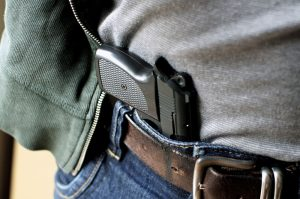
Whether it is defense of yourself or your loved ones, learning the proper concealed carry skills are critical. After you complete your concealed carry training class, learn the basics of handguns and safety, and receive your CCW license or permit, it’s time to start mastering the skills of CCW. Anyone who relies on a handgun for self-defense is best served by mastering these essential skills of concealed carrying.
1. DRAWING YOUR WEAPON
No matter what gun you carry concealed, being able to draw it quickly and effectively while under stress is critical for your survival.
- The fingertips of your gun hand should come to your abdomen while your support hand fingers begin to extend outward. Make sure your gun hand fingers clear your outer garment, while your support-hand fingers point forward toward the threat.
- Your gun hand should go straight down and grab your holstered pistol. Draw it upward out of the holster, click and lock towards the target as your support hand comes forward behind the muzzle.
- Fully extend both arms with both hands gripping the pistol and the gun hand index finger on the trigger, ready to fire if necessary.
2. ACCURACY
Unless you hold the pistol perfectly still while applying pressure on the trigger when you shoot, the gun will move. If the gun moves, your shoot will not land where you aimed. By using dry fire practice with your pistol, your will learn how to press the trigger without moving the gun and hit your target every time.
3. SPEED
The best way to learn how to develop speed in accurately drawing and firing your weapon is to master the basic building blocks of handgun shooting. Spend time hitting a target accurately on demand starting from your holster position. Repetitive drills will improve both accuracy and speed.
Very few shooters can tell what their draw-to-shoot times are. Now, you can download a $10 shot timer app on your smart phone and have all of your data immediately recorded for you to review later.
Time yourself and then set reasonable goals, working carefully and safely to improve your times.
4. RELOADING
If you are in a self-defense situation, being able to quickly and properly reload an empty gun is critical. Shooters should know the ways to load, unload, and reload various handguns. You need to practice doing an emergency reload and a tactical reload until you can do it fairly quickly. Practice with working the magazine release while keeping your eye on the target at the same time. Drill and practice while help you improve the speed of your reloads.
5. CLEAR YOUR WEAPON OF A MALFUNCTION
There are a number of techniques for clearing a malfunction in your weapon. When you are fighting for your life in a self-defense situation, whatever works is the best technique. Malfunctions can occur for a number of reasons like a dirty or un-lubricated weapon, poor ammunition, etc. Cleaning and maintaining your weapon regularly can prevent malfunctions.
If your weapon malfunctions in a gun fight-get to cover immediately! You don’t want to stop and unload and reload your weapon while you are a sitting duck to your attacker. Once under cover, keep an eye out for your attacker while you:
LOCK the slide / bolt to the rear,
RIP the magazine out,
RACK the slide / bolt to clear the chamber, then
TAP a new magazine into place,
RACK the slide / bolt and
READY.
In order to be able to do this under fire, you need to practice when you are not under fire using training cartridges.
6. COVER & CONCEALMENT
Cover and concealment are actually two different things. When you are seeking cover, you are looking for protection from someone shooting at you like behind a parked car, or dropping to the ground behind an object or structure, boulders etc. When you are looking for concealment, you are seeking to stay hidden while moving away from an attacker or in order to ambush an attacker. Camouflage, foliage, trees all offer concealment. Recognizing them and using them quickly can save your life.
7. ONE-HANDED SHOOTING
In real life says most shooters in close-quarters life-threatening situations “revert” to a one-handed grip. Your spare hand allows you to turn on or off a light, open or close a door, dial 911, strike your attacker, deflect a blow, push people out of the way (for a clear shot or to protect them from an attack) and/or grab and move someone out of the ay during a gun fight.
If you have a gun for self-defense, you should know how to operate it and shoot it safely. Most importantly, you should be able to shoot it effectively one-handed, without the use of the sights. This entire means that you should be practicing shooting your pistol with one hand.
8. TWO-HANDED SHOOTING
If your target is beyond arm’s reach, shooting with two hands allows for better recoil management and better accuracy and ability to place faster follow up shots. That might be way you always see cops on TV take the stance and shoot two handed when a suspect is fleeing the scene of a crime. To improve your accuracy and speed, dry fire practice is your best bet.
9. STAY AWARE OF YOUR SURROUNDINGS
When you are a concealed carrier, you always need to be aware of your surroundings to be able to identify a potential threat or dangerous situation. We call this “situational awareness”. It is more of a mindset than a skill, but like a skill it has to be consciously practiced and honed over time. Keep your eyes moving, gauge the mood and feel of your environment and be alert to any changes or developments.
10. BE PREPARED TO ENGAGE
Always be prepared to engage an attacker by practicing alertness, learning how to threat assess others, create strategic positioning with an opponent, develop reactionary gaps with others, understand the rules of engagement, learn and practice what threat levels are, learn how to engage or disengage from your attacker, and most importantly, learn how to survive the threat, whenever and wherever necessary.
To be effective, you must be completely comfortable with every aspect of putting your concealed carry gun to use. You should be so familiar and comfortable that you can draw, shoot, clear malfunctions and reload without consciously thinking about what you’re doing. If you have to use conscious thought to accomplish these tasks, your ability to defend yourself is diminished, because as a concealed carry citizen, you only have the right to use deadly force when you literally fear for your life or the life of someone else, and fear almost always diminishes performance.
10 ESSENTIAL CONCEALED CARRY SKILLS
September 23, 2019
Whether it is defense of yourself or your loved ones, learning the proper concealed carry skills are critical. After you complete your concealed carry training class, learn the basics of handguns and safety, and receive your CCW license or permit, it’s time to start mastering the skills of CCW. Anyone who relies on a handgun for self-defense is best served by mastering these essential skills of concealed carrying.
1. DRAWING YOUR WEAPON
No matter what gun you carry concealed, being able to draw it quickly and effectively while under stress is critical for your survival.
- The fingertips of your gun hand should come to your abdomen while your support hand fingers begin to extend outward. Make sure your gun hand fingers clear your outer garment, while your support-hand fingers point forward toward the threat.
- Your gun hand should go straight down and grab your holstered pistol. Draw it upward out of the holster, click and lock towards the target as your support hand comes forward behind the muzzle.
- Fully extend both arms with both hands gripping the pistol and the gun hand index finger on the trigger, ready to fire if necessary.
2. ACCURACY
Unless you hold the pistol perfectly still while applying pressure on the trigger when you shoot, the gun will move. If the gun moves, your shoot will not land where you aimed. By using dry fire practice with your pistol, your will learn how to press the trigger without moving the gun and hit your target every time.
3. SPEED
The best way to learn how to develop speed in accurately drawing and firing your weapon is to master the basic building blocks of handgun shooting. Spend time hitting a target accurately on demand starting from your holster position. Repetitive drills will improve both accuracy and speed.
Very few shooters can tell what their draw-to-shoot times are. Now, you can download a $10 shot timer app on your smart phone and have all of your data immediately recorded for you to review later.
Time yourself and then set reasonable goals, working carefully and safely to improve your times.
4. RELOADING
If you are in a self-defense situation, being able to quickly and properly reload an empty gun is critical. Shooters should know the ways to load, unload, and reload various handguns. You need to practice doing an emergency reload and a tactical reload until you can do it fairly quickly. Practice with working the magazine release while keeping your eye on the target at the same time. Drill and practice while help you improve the speed of your reloads.
5. CLEAR YOUR WEAPON OF A MALFUNCTION
There are a number of techniques for clearing a malfunction in your weapon. When you are fighting for your life in a self-defense situation, whatever works is the best technique. Malfunctions can occur for a number of reasons like a dirty or un-lubricated weapon, poor ammunition, etc. Cleaning and maintaining your weapon regularly can prevent malfunctions.
If your weapon malfunctions in a gun fight-get to cover immediately! You don’t want to stop and unload and reload your weapon while you are a sitting duck to your attacker. Once under cover, keep an eye out for your attacker while you:
LOCK the slide / bolt to the rear,
RIP the magazine out,
RACK the slide / bolt to clear the chamber, then
TAP a new magazine into place,
RACK the slide / bolt and
READY.
In order to be able to do this under fire, you need to practice when you are not under fire using training cartridges.
6. COVER & CONCEALMENT
Cover and concealment are actually two different things. When you are seeking cover, you are looking for protection from someone shooting at you like behind a parked car, or dropping to the ground behind an object or structure, boulders etc. When you are looking for concealment, you are seeking to stay hidden while moving away from an attacker or in order to ambush an attacker. Camouflage, foliage, trees all offer concealment. Recognizing them and using them quickly can save your life.
7. ONE-HANDED SHOOTING
In real life says most shooters in close-quarters life-threatening situations “revert” to a one-handed grip. Your spare hand allows you to turn on or off a light, open or close a door, dial 911, strike your attacker, deflect a blow, push people out of the way (for a clear shot or to protect them from an attack) and/or grab and move someone out of the ay during a gun fight.
If you have a gun for self-defense, you should know how to operate it and shoot it safely. Most importantly, you should be able to shoot it effectively one-handed, without the use of the sights. This entire means that you should be practicing shooting your pistol with one hand.
8. TWO-HANDED SHOOTING
If your target is beyond arm’s reach, shooting with two hands allows for better recoil management and better accuracy and ability to place faster follow up shots. That might be way you always see cops on TV take the stance and shoot two handed when a suspect is fleeing the scene of a crime. To improve your accuracy and speed, dry fire practice is your best bet.
9. STAY AWARE OF YOUR SURROUNDINGS
When you are a concealed carrier, you always need to be aware of your surroundings to be able to identify a potential threat or dangerous situation. We call this “situational awareness”. It is more of a mindset than a skill, but like a skill it has to be consciously practiced and honed over time. Keep your eyes moving, gauge the mood and feel of your environment and be alert to any changes or developments.
10. BE PREPARED TO ENGAGE
Always be prepared to engage an attacker by practicing alertness, learning how to threat assess others, create strategic positioning with an opponent, develop reactionary gaps with others, understand the rules of engagement, learn and practice what threat levels are, learn how to engage or disengage from your attacker, and most importantly, learn how to survive the threat, whenever and wherever necessary.
To be effective, you must be completely comfortable with every aspect of putting your concealed carry gun to use. You should be so familiar and comfortable that you can draw, shoot, clear malfunctions and reload without consciously thinking about what you’re doing. If you have to use conscious thought to accomplish these tasks, your ability to defend yourself is diminished, because as a concealed carry citizen, you only have the right to use deadly force when you literally fear for your life or the life of someone else, and fear almost always diminishes performance.